Battersea Bridge Tower Refusal Appeal Bid Fails
Widespread relief as inspector rejects 'alien and isolated' building
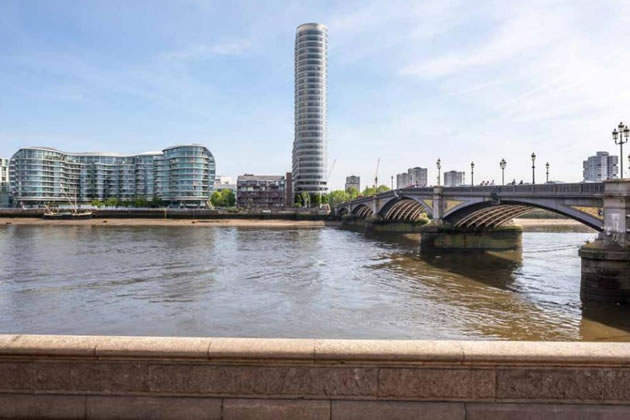
CGI of the proposals for One Battersea Bridge. Picture: Farrell
May 27, 2026
A developer has lost a controversial bid to build a 29-storey tower at the bottom of Battersea Bridge, which drew opposition from celebrities including Mick Jagger and Eric Clapton.
Rockwell appealed to the Planning Inspectorate after Wandsworth Council rejected the 110-home scheme last year on the basis it failed to follow policy or meet the needs of the local community. Inspector Joanna Gilbert has now dismissed Rockwell’s appeal in a highly-anticipated decision, after a seven-day public inquiry in March, ruling it would “appear alien and isolated”.
Ms Gilbert agreed the tower went against policy by being five times taller than the recommended building height of six storeys – or 18 metres – in the area.
The inspector also said it would have a harmful impact on the character and appearance of the area, while it would cause less than substantial harm to local historic bridges, parks and conservation areas – including Battersea Bridge, Albert Bridge, Battersea Park and Hyde Park.
In a new report, Ms Gilbert wrote: “Few development sites of this type are available in a world city, directly adjacent to a river and multiple bridges, in the setting of an array of historic buildings and features, as well as being located close to more modern, high quality architecture nearby.
“However, the proposal is not exemplary, extraordinary, remarkable or distinctive, just tall. It would not adorn the London skyline and would not form part of a ribbon cluster of tall buildings, but would appear alien and isolated in its very height in this location, harming spatial character.”
Ms Gilbert said Rockwell had failed to properly test the viability of lower-rise alternatives, with “little effort to come anywhere close to reasonable policy expectations”.
Rockwell originally proposed for the tower to reach up to 39 storeys in height, replacing the six-storey Glassmill office building on the site, but later slashed this to 29 storeys. It applied in 2024 to build the tower with 110 flats, including 54 affordable homes to be offered at social rent – or 50 per cent by habitable room – workspace for small businesses, a restaurant and hub for local charities.
The scheme faced fierce opposition from residents and heritage groups from the start, with locals raising particular concerns about its scale and impact on traffic.
Rob McGibbon, editor of The Chelsea Citizen, launched a Change.org petition in 2024 calling for the plans to be scrapped, which gained more than 5,000 signatures and support from celebrities including Mick Jagger, Eric Clapton, Felicity Kendal, Anthea Turner, Harry Hill and Lord Browne of Madingley.
The application also drew 2,028 objections on the council’s planning portal and 1,892 letters of support.
Objectors raised concerns over the credibility of the support letters as many followed the same template and were uploaded in batches, although Rockwell said gathering voluntary letters of support through canvassing and advertising was standard industry practice.
In a victory for campaigners, the council’s planning committee rejected the scheme last April as members said the tower would be too big for the constrained site, spoil the skyline and “devastate” neighbours’ lives.
The Greater London Authority (GLA) allowed the council’s decision to stand the following month.
Rockwell then appealed to the Planning Inspectorate to overturn the council’s decision, with a public inquiry held in March to finally decide the scheme.
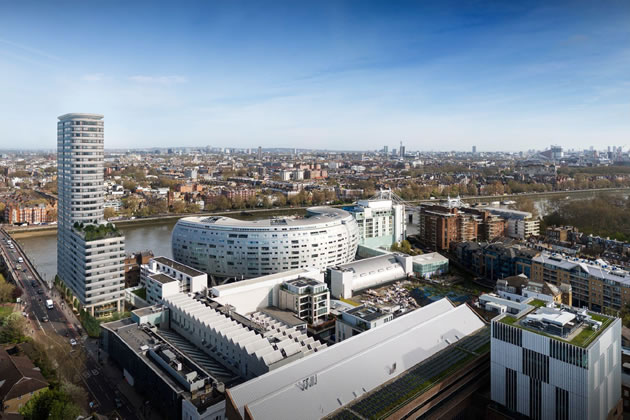
CGI of the proposals for One Battersea Bridge. Picture: Farrell
Douglas Edwards KC, representing the council, told the inquiry when it opened on March 17 that the height and scale of the development was too great and would substantially harm the character of its surroundings in Battersea and Chelsea.
He said it conflicted with Wandsworth’s development plan, made up of the Local Plan and London Plan – an issue which was not outweighed by its benefits. The barrister said that while the council was not opposed to redevelopment of the site, the scheme was not appropriate and should be dismissed.
William Walton also called for Rockwell’s appeal to be thrown out on behalf of a consortium of local groups made up of the Battersea Society, Chelsea Society, Cheyne Walk Trust, Friends of Battersea Park, Putney Society and Wandsworth Society.
Mr Walton described the building as “too large, too great a mass and too high for the site’s footprint”.
He said the proposal was an “inappropriately tall building located within an area designated in a very recently adopted Local Plan for much more modest scale projects”.
Setting out the developer’s case, however, Russell Harris KC argued the “elegant building of exemplary quality” would improve the character and appearance of its surroundings.
He said the site “should accept optimised change” and did allow for a landmark, high-quality tall building to be built with much-needed affordable housing to tackle the capital’s housing crisis.
Mr Harris argued Wandsworth’s Local Plan was out of date and should not be read as banning tall buildings in the area.
He said: “This is a unique and totemic opportunity to optimise the delivery of housing and affordable housing on this brownfield site.”
While Ms Gilbert said the scheme would deliver the benefits of new market and affordable housing, a community facility and offices, she gave “very substantial weight” to its negative impacts on the character and appearance of the area and how it conflicted with policy.
Dismissing Rockwell’s appeal, Ms Gilbert ruled: “The proposal would be contrary to the development plan taken as a whole, and there are no material considerations that indicate that planning permission should otherwise be granted.”
Charlotte Lilywhite - Local Democracy Reporter